BUKETOV INSECT VILLAGE — A NEW STEP TOWARDS CAMPUS ECO-CREATION
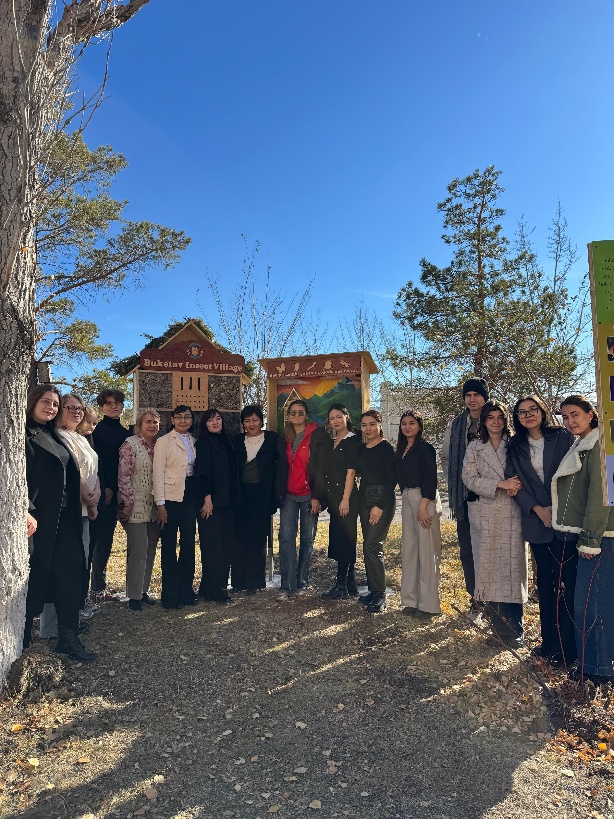
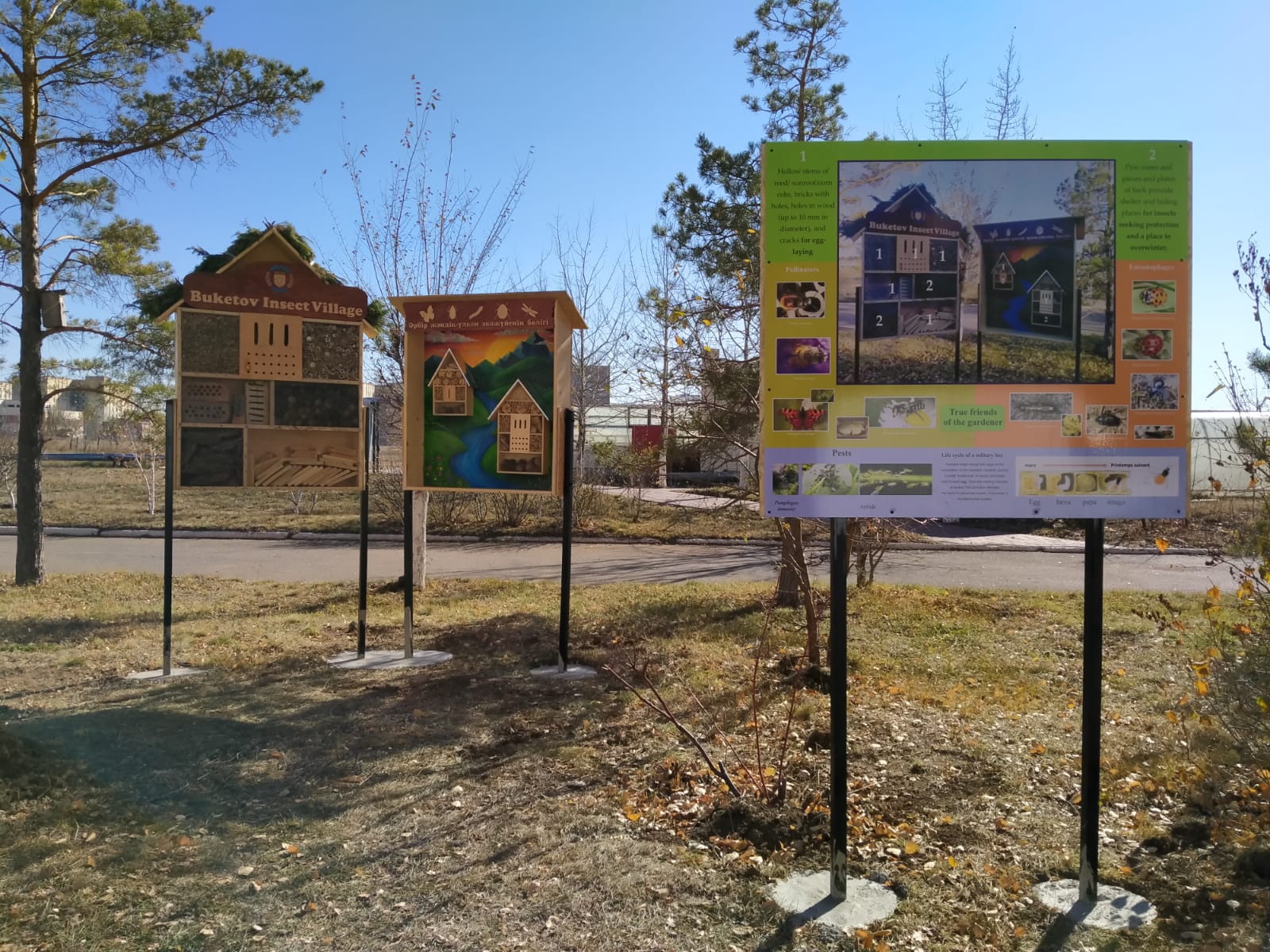
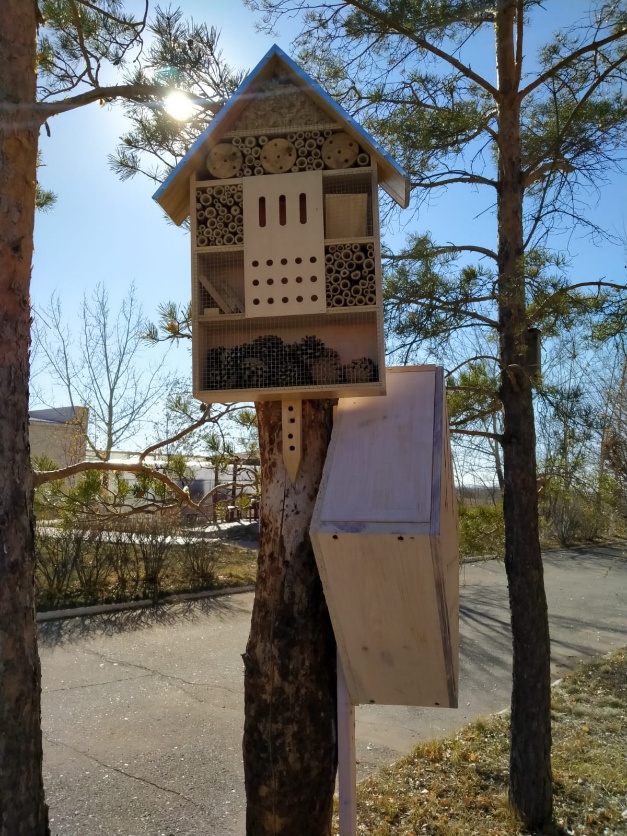
The E.A. Buketov Karaganda National Research University has become the first university in Kazakhstan to implement an environmental initiative to create insect "houses" on campus. The Buketov Insect Village project, launched by the Faculty of Biology and Geography, aims to preserve biodiversity and develop environmental awareness among students.The project was developed using artificial intelligence, which, based on field data, proposed optimal house models, calculating the diameter of passages, cavity depths, and types of fillers suitable for local pollinators and entomophages. The structures are made from environmentally friendly and recycled materials—branches, pine cones, wood, bamboo, and bark—and are installed next to ornamental plantings and flower beds. This combination creates a comfortable environment for solitary bees, hoverflies, ladybugs, and other beneficial insects—indispensable helpers in maintaining ecosystem balance.The insect "hotels" provide shelter for beneficial insects in winter and a place for them to nest and reproduce in summer.Thus, Buketov Insect Village not only beautifies the university campus but also helps maintain the natural balance, reducing the impact of urbanization on small fauna.The initiative was implemented by a research team from the Faculty of Biology and Geography:Scientific Advisor: Veronika Sergeevna Abukenova, PhD, Associate Professor of the Department of Zoology.Zhanerke Zhakanovna Blyalova – Project Director, second-year doctoral student, Program 8D05101-Biology;Tolganay Nurlankyzy Karimtaeva – Project Implementer, Lead Specialist, Museum of Nature; Anastasia Fedorova, project manager and engineer at the Biotechnology and Environmental Monitoring Research Park;Alexander Petrunin-Sukharev, project manager and fourth-year student in program 6B05101-Biology.The team included faculty and young researchers from the Department of Zoology, as well as undergraduate and graduate students passionate about sustainable development and biodiversity conservation.The project participants designed the structures, selected eco-friendly materials, and installed the houses.